Mobile
Draft
Retail App
A shopping app built around asking for what you want in your own words, instead of translating it into categories and filters first.
Type
Mobile product design
Role
UX and UI
Surface
iOS
Overview
Most shopping apps ask you to arrive knowing the vocabulary. You want something for a reunion, and the app offers you Apparel, Dress, Tshirt, Bag. This project starts from the opposite end: say the occasion, and let the app do the translating.
The problem
People shop by situation, not by taxonomy. The gap between how someone describes what they need and how a catalogue is organised is where most browsing sessions quietly end.
PlaceholderThis case study is a draft. Replace this section with the real brief, process and outcome.
What I did
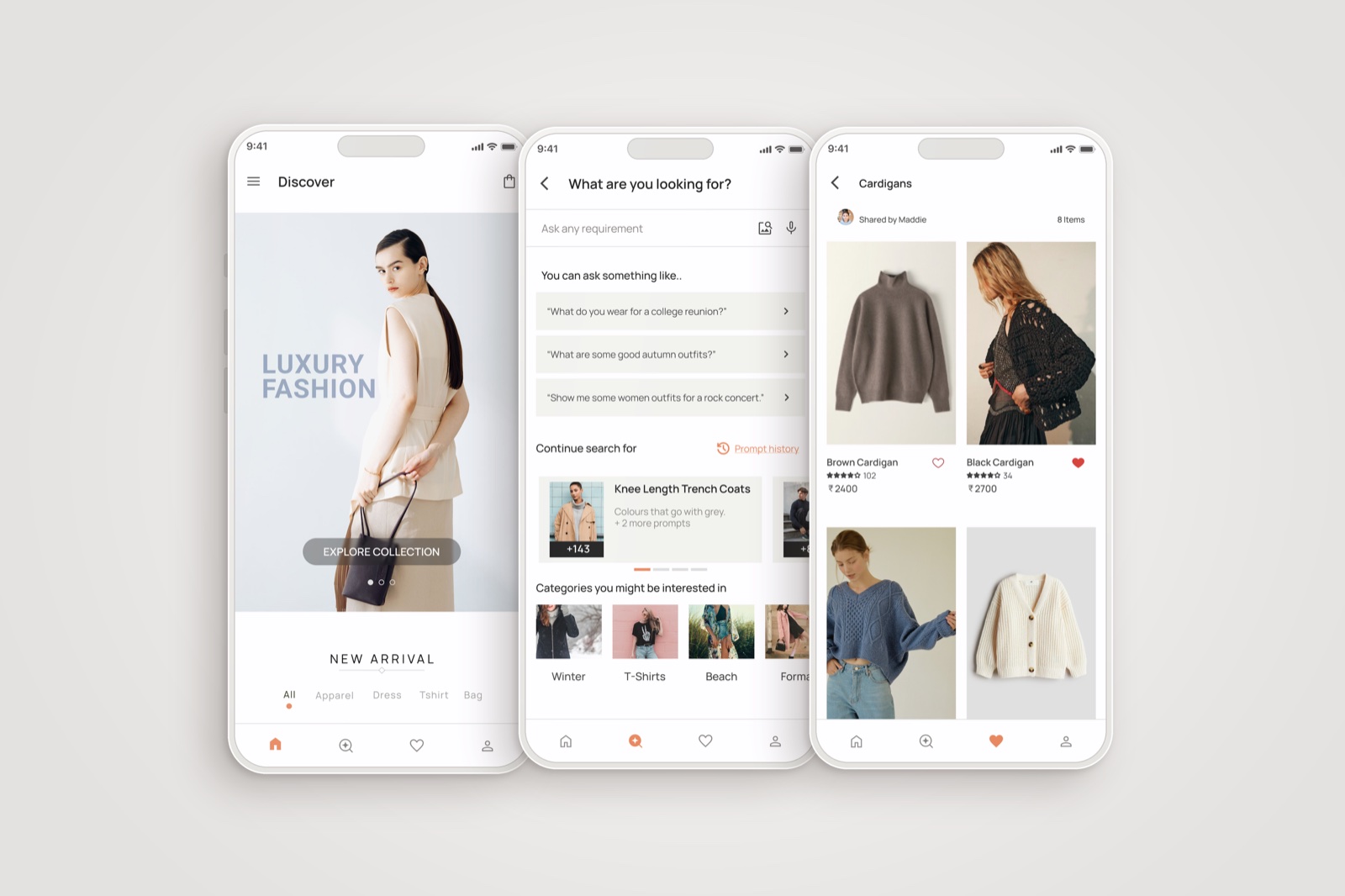
- A search that takes a sentence. The entry point accepts plain requests, with worked examples on screen so the first search is never a blank box.
- Searches you can return to. Past prompts are kept as resumable threads, so a half-finished hunt for a coat is still there tomorrow.
- Collections made to be shared. Results become a named set with saves and ratings, attributed to whoever put it together.
The screens
01
DiscoverA merchandised home screen with a seasonal hero and a new-arrivals rail, filtered by a light category strip.
02
AskThe natural-language search, with example prompts, prompt history, and suggested categories underneath.
03
CollectionA saved set of cardigans with prices, ratings and favourites, credited to the person who shared it.
Where it landed
The three screens here are the spine of the flow: arrive, ask, collect. Everything else in the app hangs off that loop.
PlaceholderThis case study is a draft. Replace this section with the real brief, process and outcome.